My own projects / SNAFU
SNAFU.
Built as a world.
A hand-filed market for rare clothing, cultural signal, and found objects. A distinctive identity carried from the first screen to the individual piece.
- Business
- SNAFU / Internal
- Experience
- Archive & curated storefront
- Hosting signal
- Vercel HTTP response
- Commerce status
- Catalog live; checkout not active in reviewed product
01 / Brand as interface
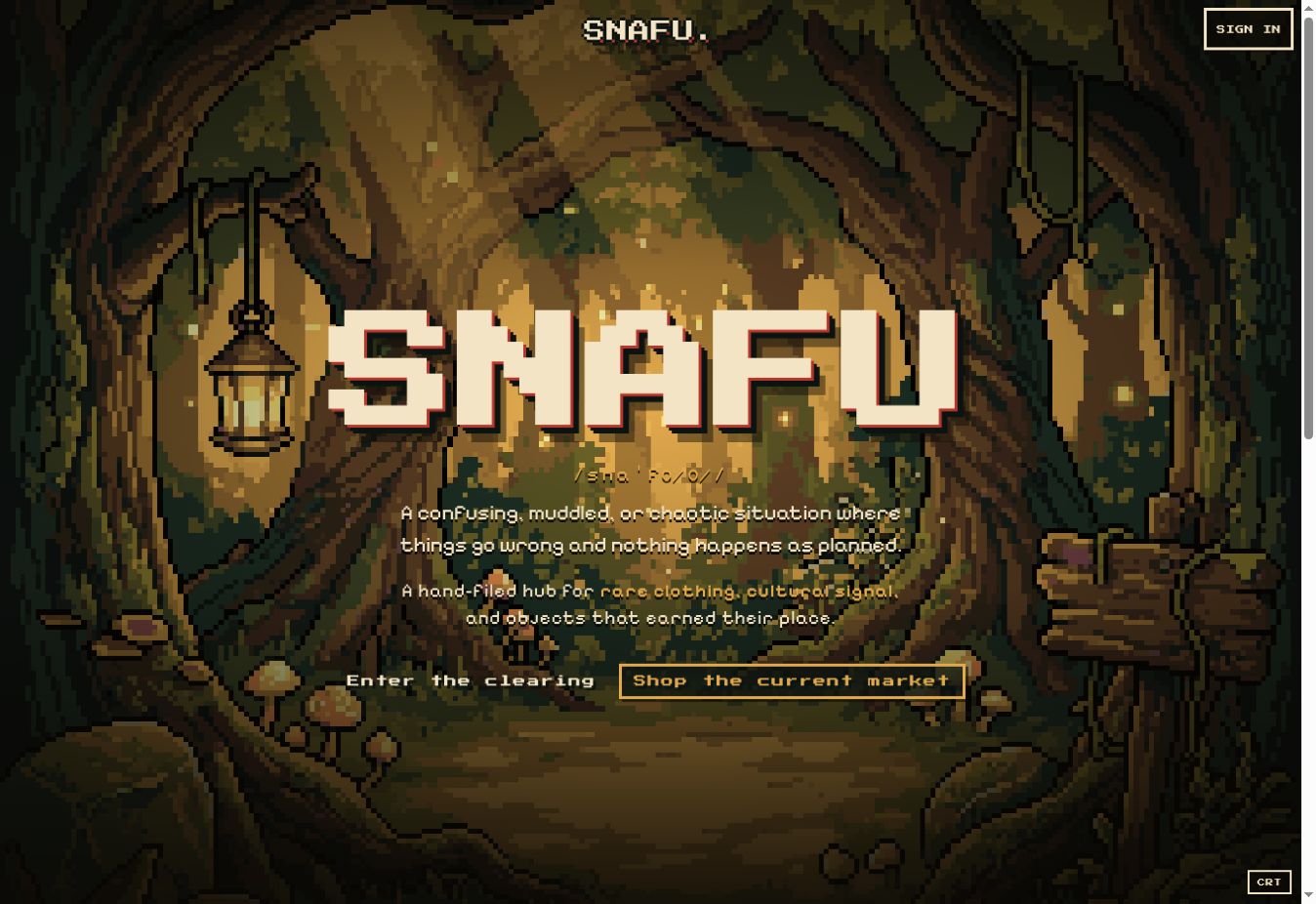
The entrance is part of the experience.
A pixel-art forest, stepped typography, and a field-guide navigation turn arriving into a deliberate moment. The shop remains directly accessible for visitors who already know what they want.
The lesson for another business isn’t to copy the forest. It’s to make the interface feel native to the brand while keeping the important action easy to find.
01 / Discovery
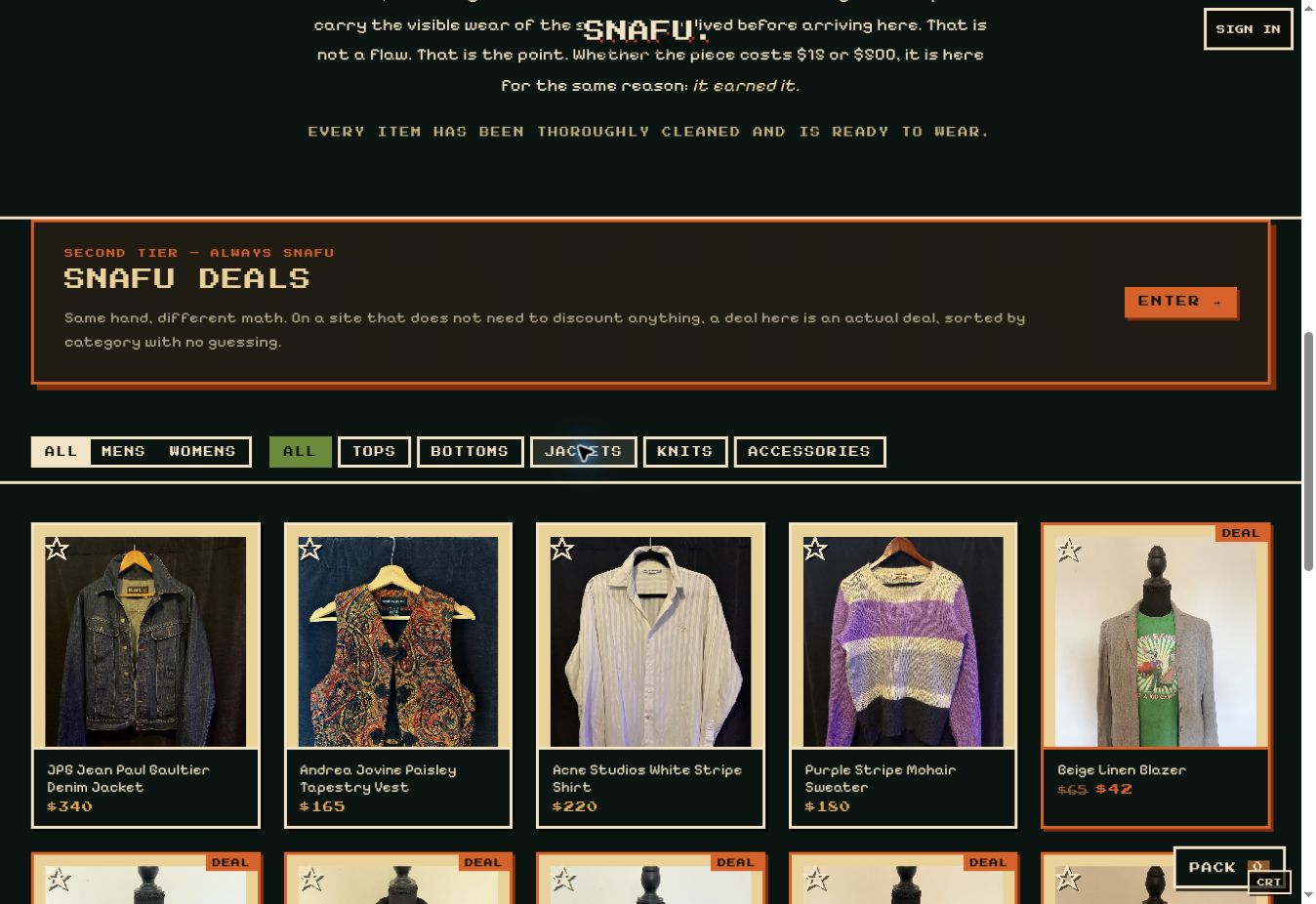
A collection with structure.
Mens and womens controls sit alongside product categories. A clear route through the catalog matters as the inventory changes.
02 / Merchandising
Two tiers. One identity.
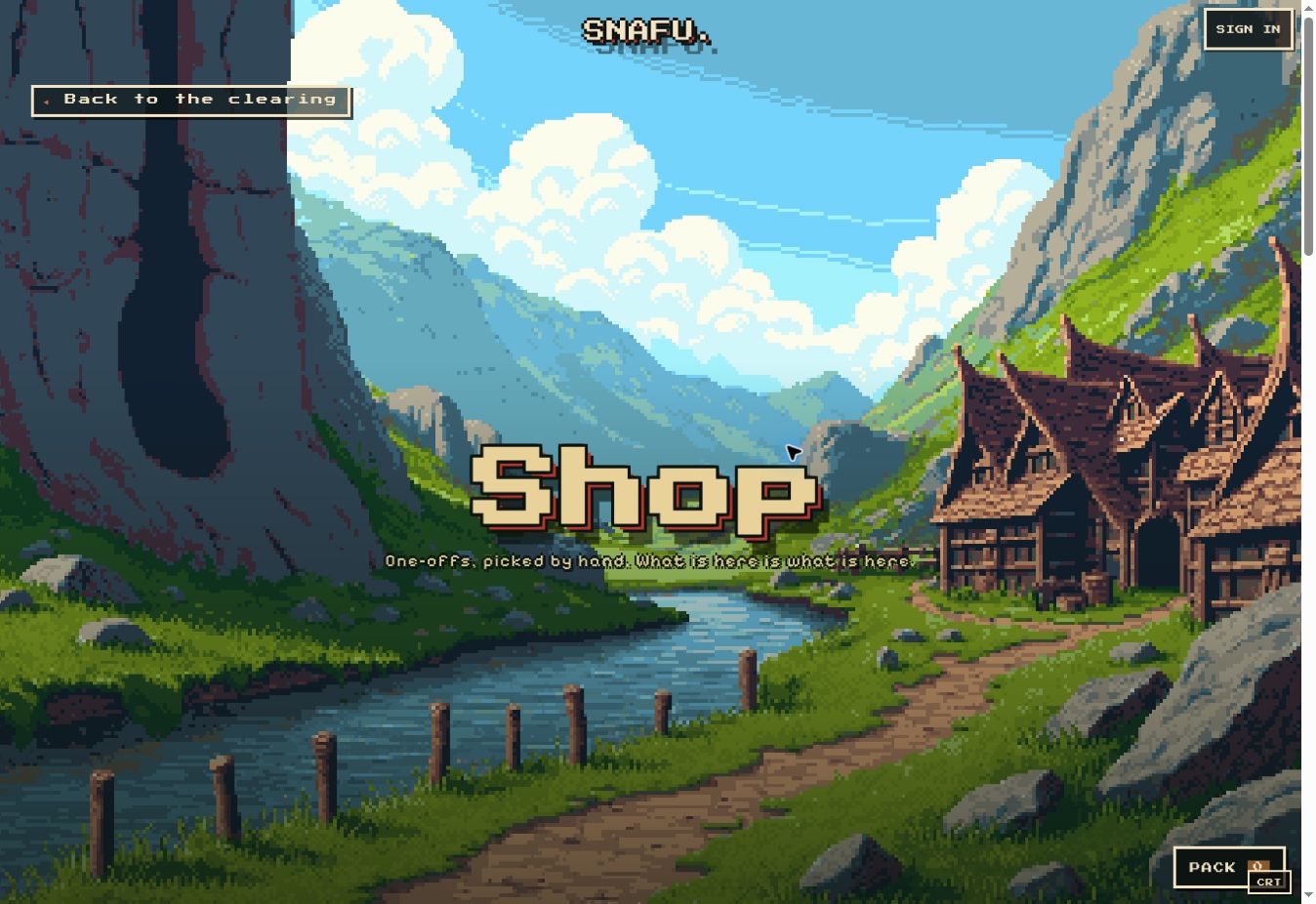
SNAFU Deals has its own destination and price treatment without sending customers into an unrelated experience.
03 / Product records
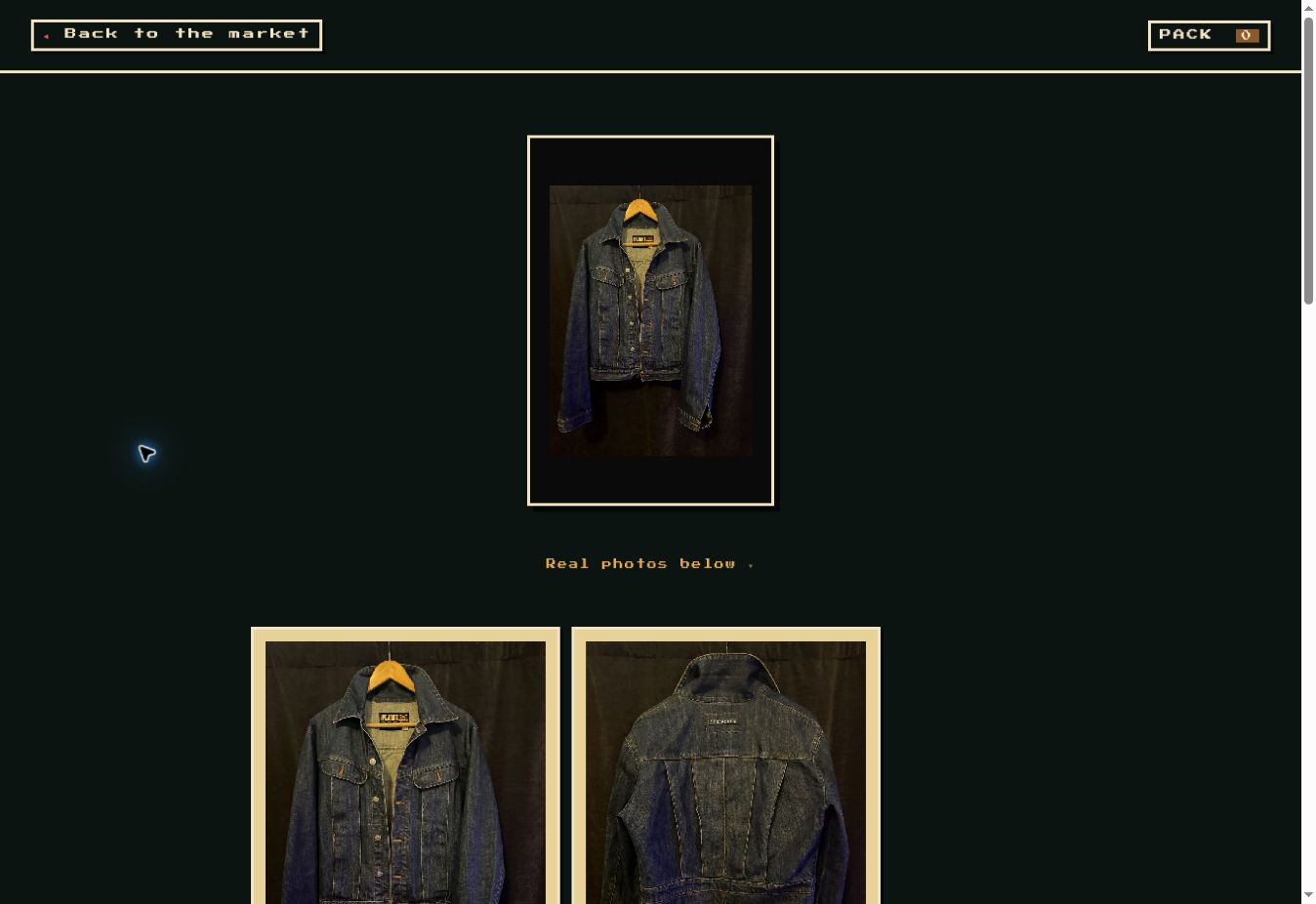
More than a price.
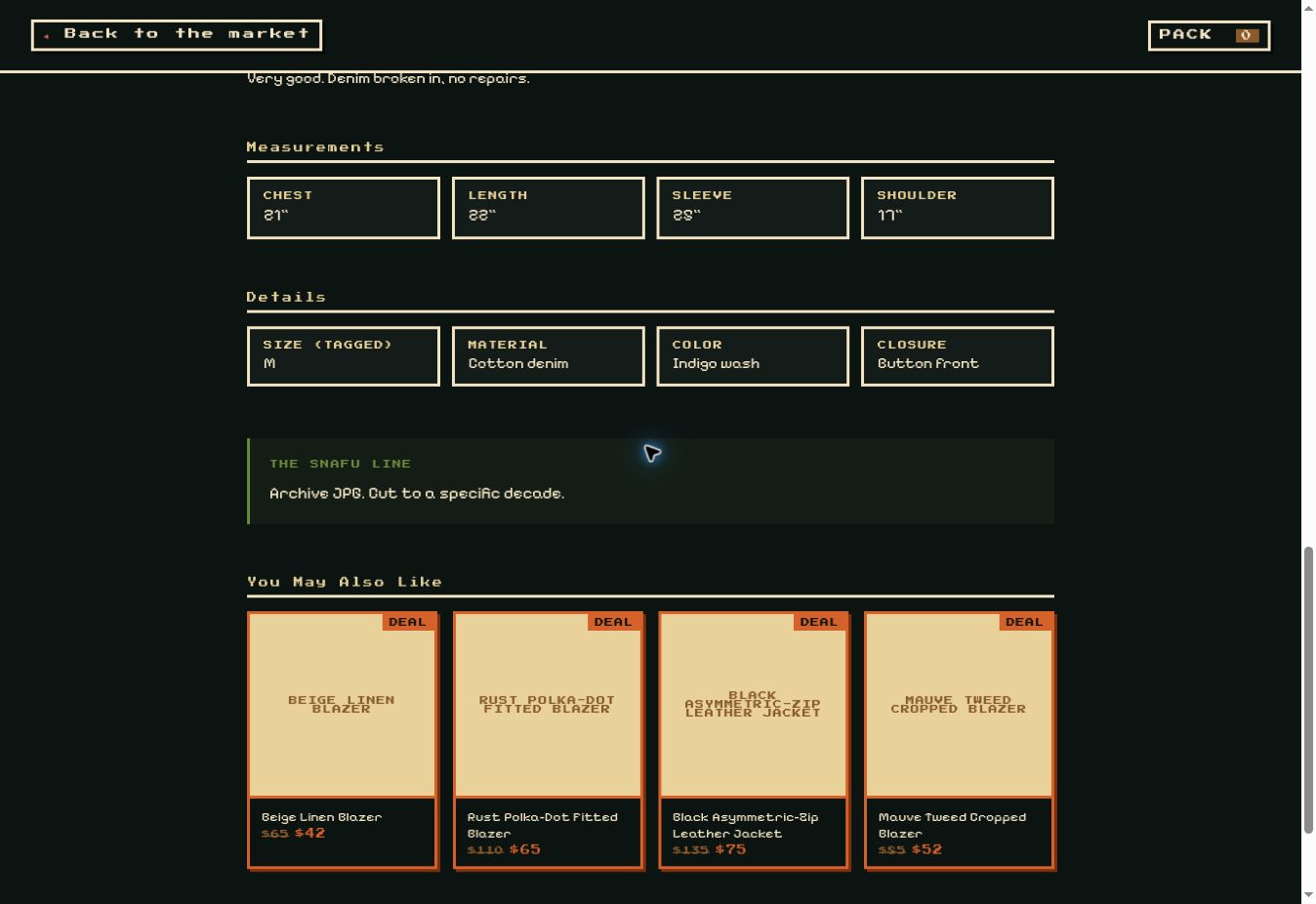
Individual records include provenance fields, condition, measurements, materials, and photography—the details a one-off garment needs.
02 / The technical record
What runs underneath.
The inspected public pages use HTML, CSS, and JavaScript, including separate product-data and cart scripts. The domain redirects to www.snafu.quest; the response identifies Vercel.
That establishes the public delivery layer, not the entire backend. A hosting plan, recurring bill, database, payment processor, or completed migration cannot be established from a public screenshot.
Delivery, content, and dependencies
- Delivery
- HTTPS website served through Vercel, based on the observed response header.
- Public presentation
- HTML documents with CSS and browser JavaScript. Homepage markup identifies a static title screen.
- Product presentation
- Public product page references shop-data.js and cart.js; individual products use a query-string record ID.
- Typography
- Homepage requests Press Start 2P and Pixelify Sans through Google Fonts.
- Unknown from public access
- Account plan, invoices, server-side inventory, payment integration, analytics, backups, and administrative tools.
03 / Scope & honesty
Catalog live. Commerce still developing.
The reviewed product displayed “CHECKOUT SOON” as disabled, alongside “ADD TO PACK.” The case therefore demonstrates a catalog and shopping interface, not a verified end-to-end payment system. No purchase was attempted.
We have not published savings figures, conversion gains, or a claim that SNAFU has fully replaced Shopify. Those require billing records and operational testing.
04 / Transferable thinking
Own the experience. Choose the services.
A restaurant may need a menu and a reservation link, not a commerce platform. An accounting practice may need clear services and safe inquiry routing. A pizzeria may need an excellent ordering interface connected to its existing POS.
The common principle: separate the design from the tools behind it, then retain only the services that do useful work.
Explore three applications